What Needs to Be Transported? Choosing an AGV Starts with the Load
In part 1 of our series From Movement to Automation, we started with the process: which movement do you want to organise more smartly? The next question seems simple, but it largely determines how that movement can be automated: what actually needs to get from A to B?
A pallet calls for a different approach than a cart. And a load carrier with semi-finished products may have different requirements than a pallet of finished goods. That’s why, on every project, we first look at three things.
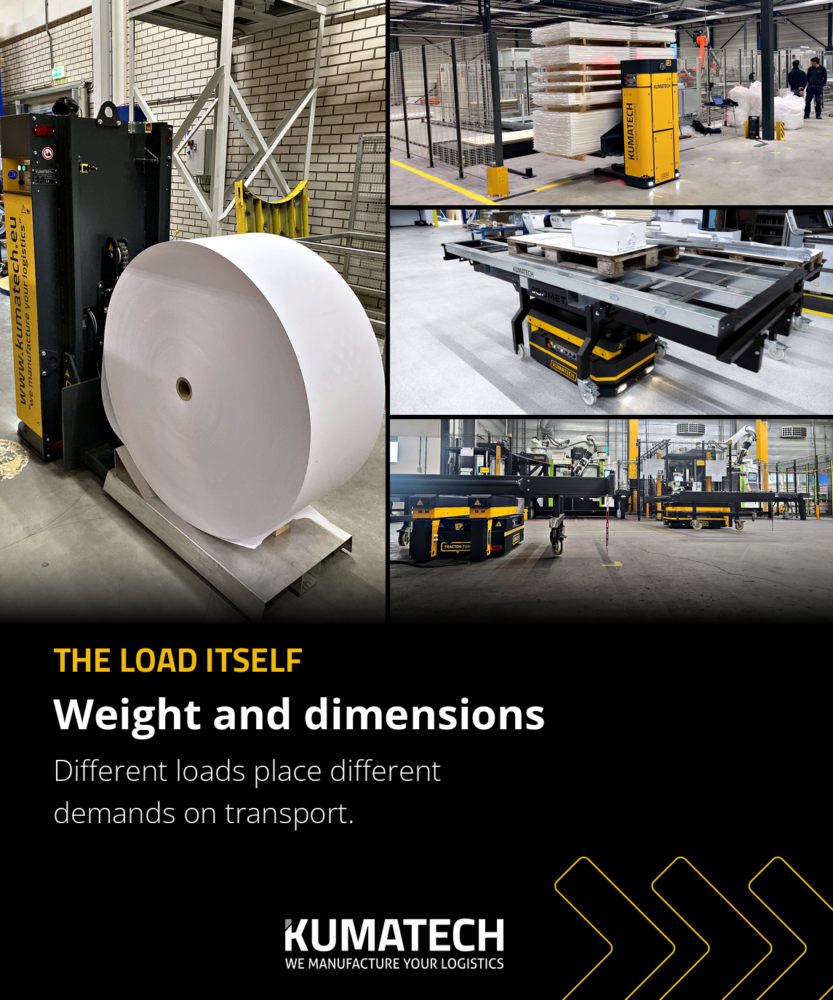
1. The load itself: weight and dimensions
Different types of cargo place different demands on transport. A roll of paper, a stack of doors or a cart carrying sheet metal differ significantly in terms of weight, dimensions and stability. This determines which vehicle is suitable and how it needs to hold the load.
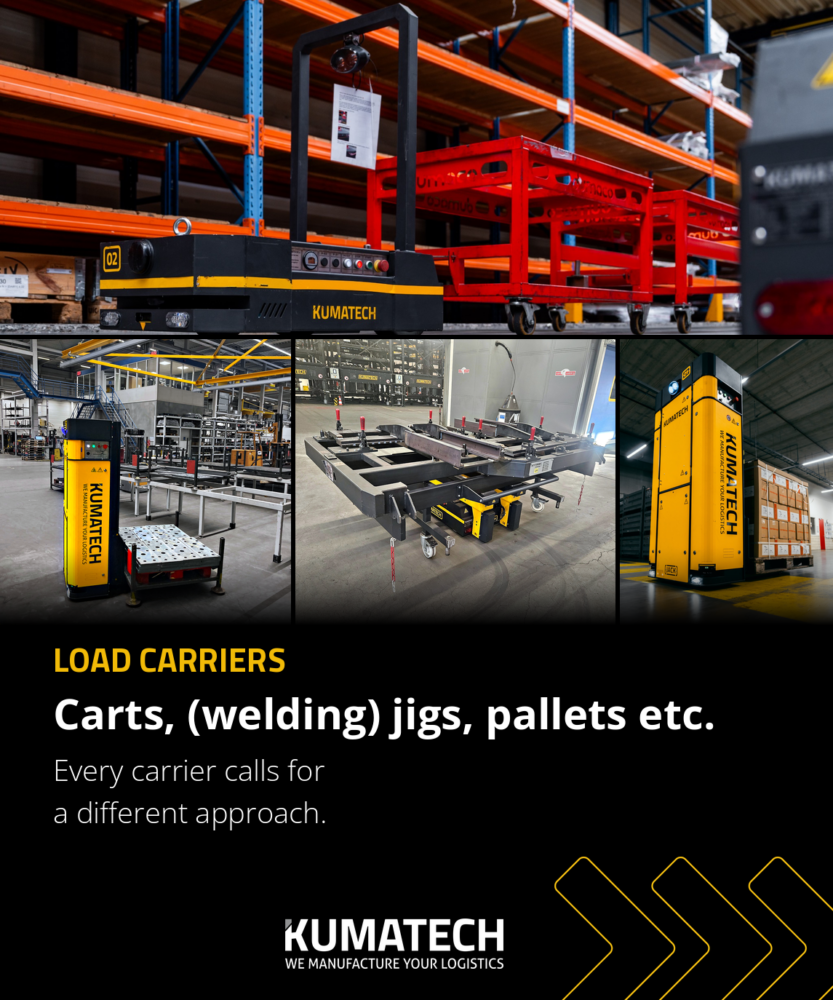
2. The load carrier: carts, (welding) jigs, pallets and more
It’s not just the load that matters, but also what it rests upon. Carts, (welding)jigs and pallets each require a different approach. Tractor Tom, for example, is suited to transport with carts, while Pallet Jack and Forklift Joe autonomously pick up and transport pallets and similar carriers.
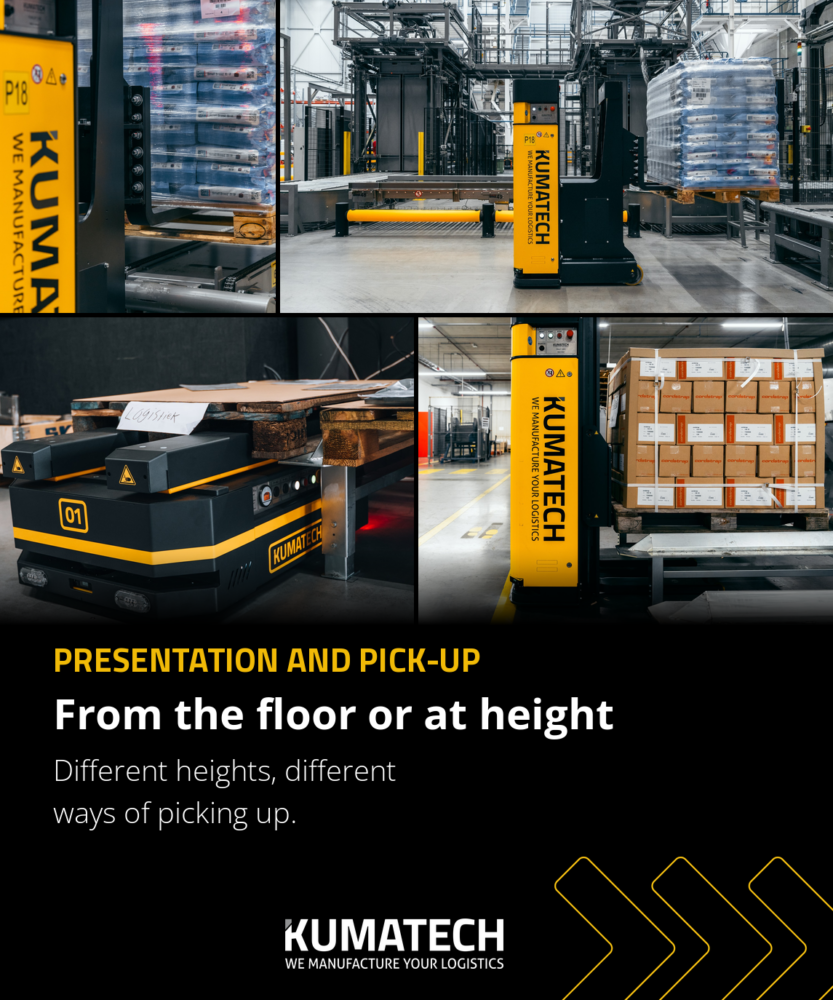
3. Presenting and picking up: from the floor or at height
Different heights call for different ways of picking up. Is the load on the floor, on a station or at the end of a roller conveyor? Pallet Jack and Forklift Joe can autonomously pick up and transport pallets from the floor or from various heights. Forklift Joe goes one step further: thanks to his cantilevered forks, he can even handle closed pallets and pick up pallets from a closed base. Tractor Tom drives underneath a station or cart and takes the load along with him.
Start with what needs to move
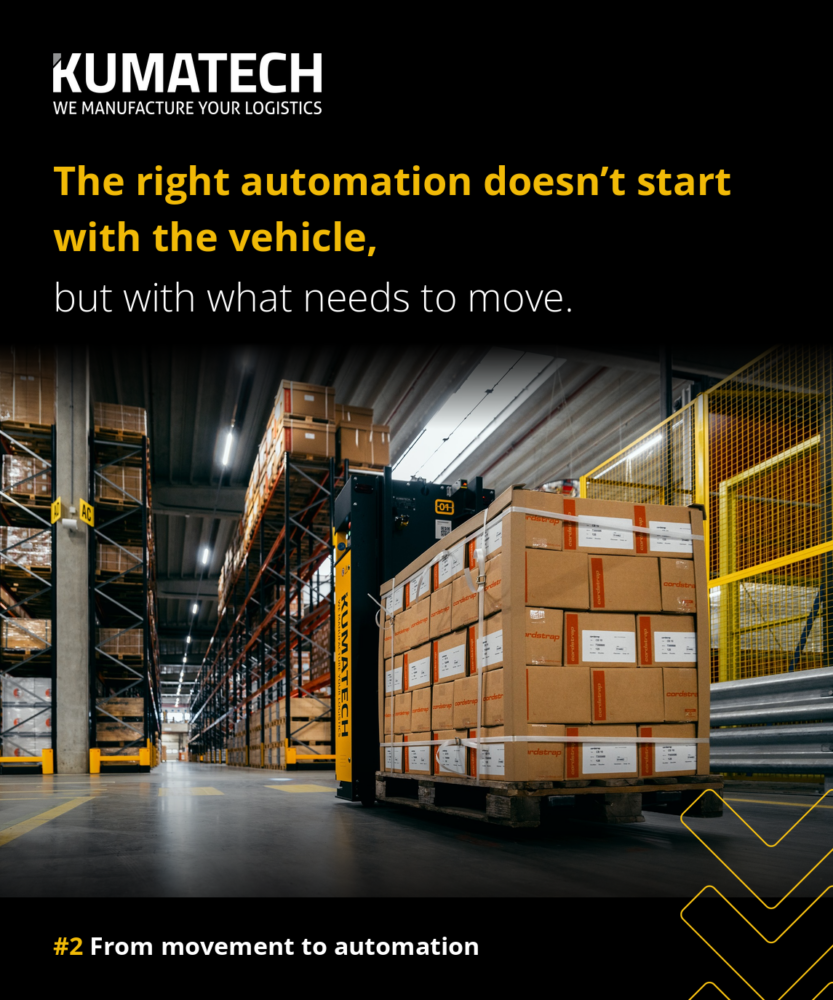
The right automation doesn’t start with the vehicle, but with what needs to move. Once you have a clear picture of the load, the carrier and the way it’s presented, you can choose the right solution much more precisely.
Download the PDF of part 2: What Needs to Be Transported? All the examples at a glance, handy to keep or share internally.
Which internal transport movements would you like to organize smarter? And which automation solution would be the right fit? Feel free to get in touch.